from 59€ with free shipping in DE
Your cart is empty


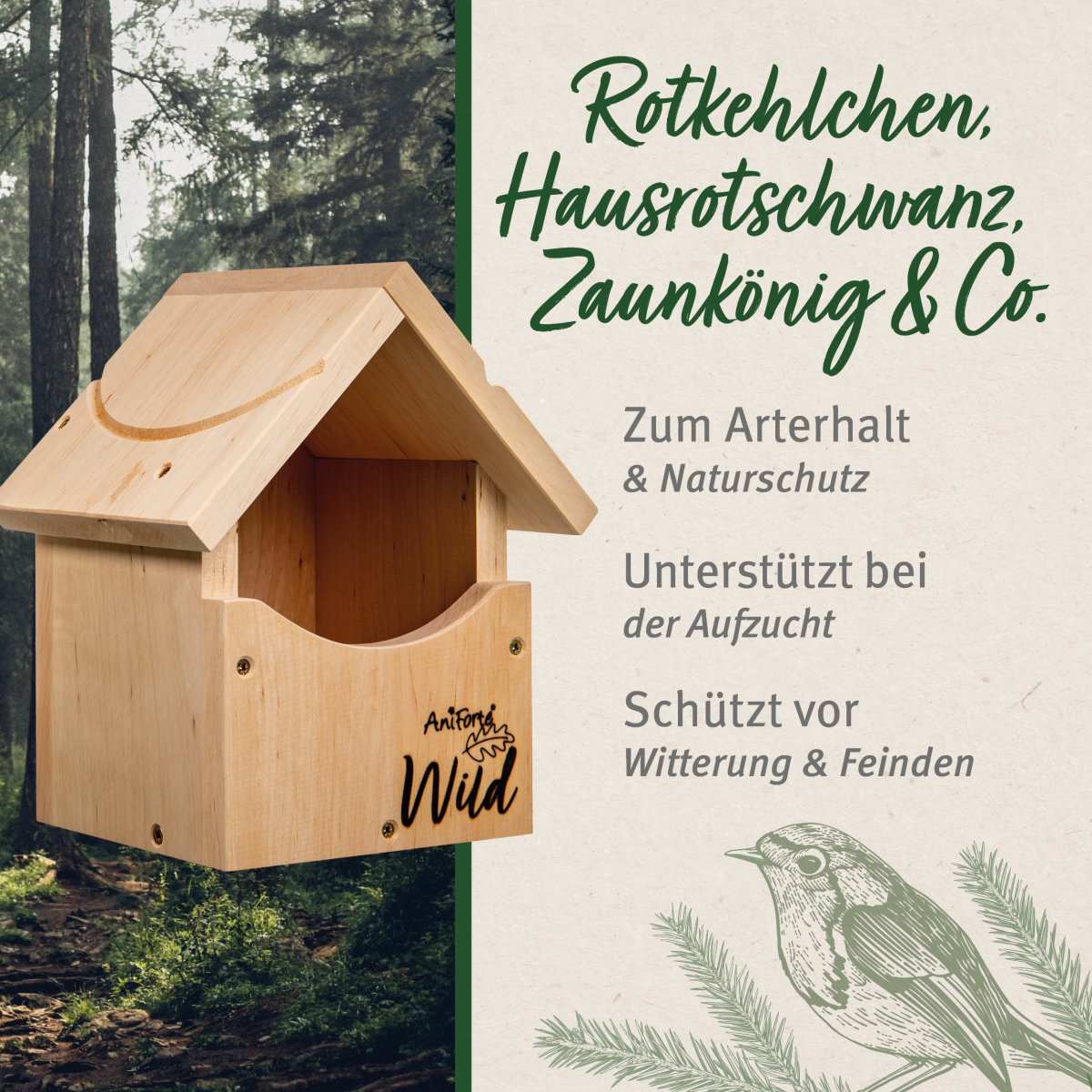


 Very high quality made of solid wood
Supports species conservation
Weatherproof & durable
From European forestry
Do you dream of watching cute robins, rare black redstarts, or noble wrens in your garden? Then our nesting box for semi-cavity nesters made of high-quality wood is just the thing for you.
The AniForte® Wild nesting box for robins and other birds offers semi-cavity nesters space and protection for raising their young. This high-quality birdhouse is made of solid, untreated wood:
Are you wondering about the shape of this nesting box? Then you're not very familiar with semi-cavity nesters: They love semi-open spaces with an entrance that offer both shelter and light and warmth. A half-cavity, in other words. Our nesting box for semi-cavity nesters provides the perfect nesting space for rare species like robins, black redstarts, and wrens. Unlike nests in the forest, our high-quality nesting boxes offer significantly more protection and thus a suitable breeding location for semi-cavity nesters.
Tips for hanging the nesting box: Nesting boxes should generally be placed in sheltered, quiet locations – meaning, far away from your patio, since you don't live right next to the market square, do you? Make sure the entrance opening is protected from strong weather influences like rain or sun. Nesting boxes are ideally placed under canopies, in small niches, or corners.
To be lucky enough to welcome a pair of robins or a few wrens into your home, you should hang the nesting boxes by March at the latest. The breeding season for semi-cavity nesters lasts from April to August. With a bit of luck, you can look forward to up to five eggs and correspondingly small birds.
The AniForte® Wild nesting box should be hung at a minimum height of 2.5 m to protect the birds from cats, martens, and other predators.
The product is equipped with a metal hook on the back, making it easy to hang on trees, house walls, and on the patio or balcony.
When hanging the product, use the screws provided.
It is very important to clean the nesting box annually after the young birds have left the nest (October to December).
Note: The wood is untreated. For a long lifespan, we recommend treating the wood with some linseed oil.


